
Home exercise sheet
Sciatica
Move slowly and stay in a range that feels comfortable. Mild stretch or effort is fine; sharp pain is a signal to stop.
Name:How often:Clinician:
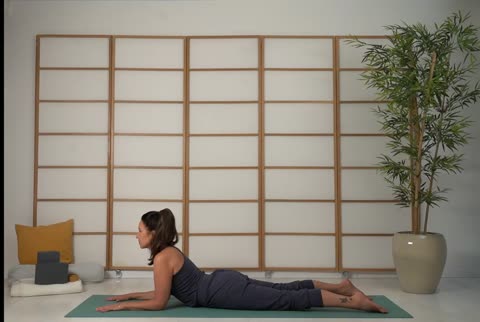
1. Sphinx
30 to 60 seconds
- Lie face down with your legs long
- Bring your forearms under you, elbows below your shoulders
- Press down and lift your chest
- Keep your head in line and look forward
- Then lower
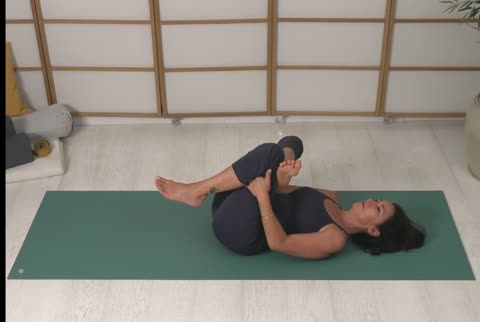
2. Figure 4 stretch
30 seconds each side
- Lie on your back with both knees bent, feet flat
- Reach through and hold behind the supporting thigh
- Draw that thigh gently toward you and hold
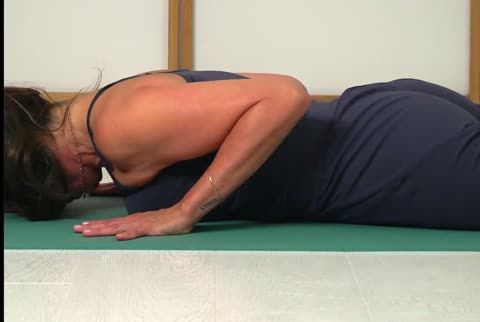
3. Cobra, minimal lift
5 slow lifts
- Lie face down with your forehead resting on the floor
- Lengthen through the top of your head first
- Lift your chest just enough that your eyes clear the floor
- Keep the weight in your body, not your hands
- Then rest down
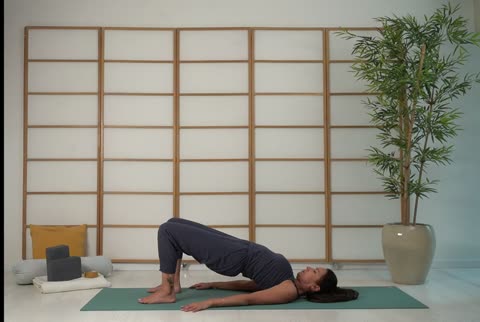
4. Glute bridge
8 to 10 slow lifts
- Lie on your back, knees bent, feet flat and about hip-width apart
- Press through your heels and lift your hips
- Lower slowly, one vertebra at a time
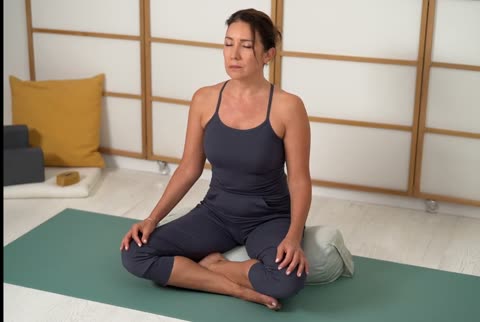
5. Extended exhale breathing
2 minutes
- Settle into any position you can stay in comfortably
- Breathe in through your nose for a count of four
- Breathe out for a count of six to eight
- Let the pause happen at the end of the exhale
The guidance behind these movements
- NICE NG59, low back pain and sciatica in over 16s (2016, updated 29 July 2026). Consider a group exercise programme that is biomechanical, aerobic, mind-body or a combination, chosen by the person's needs and capabilities.
- The McKenzie method for chronic low back pain with directional preference, systematic review with meta-analysis (2025). Direction-based treatment outperformed other conservative care in people who have a directional preference, so the benefit follows the individual finding rather than the diagnosis label.
- Centralization in patients with sciatica, prospective cohort, Albert, Hauge & Manniche, European Spine Journal (2012). Of 176 people with sciatica (leg pain below the knee) given a repeated-movement assessment, 84.8% had leg pain that centralized, meaning it eased or retreated toward the back with movement in a specific direction, and centralizing was linked to better recovery.