
Home exercise sheet
Plantar fasciitis
Move slowly and stay in a range that feels comfortable. Mild stretch or effort is fine; sharp pain is a signal to stop.
Name:How often:Clinician:
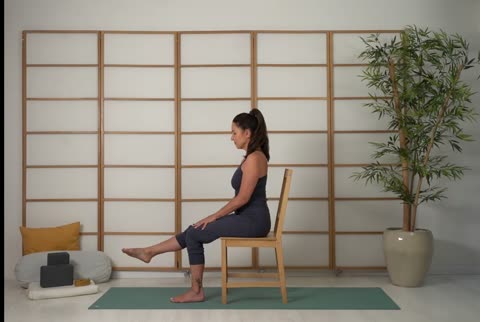
1. Lower body warm-up, chair
2 to 3 minutes
- Sit on a chair with both feet flat
- Sit forward, away from the backrest
- Take each joint through a small range in turn
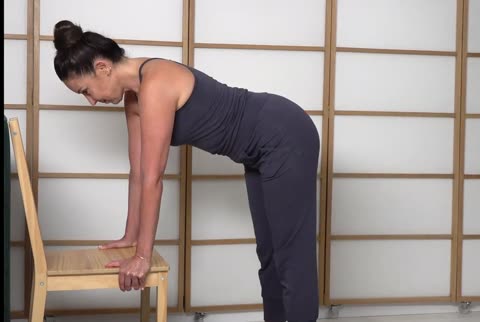
2. Downward dog, chair supported
30 to 45 seconds, twice
- Set a sturdy chair against a wall
- Stand a stride away, hands on the seat
- Walk back and hinge until your back is long
- Keep enough weight in your feet to stay grounded
- Then walk in
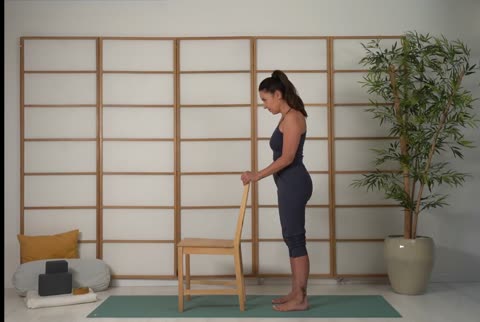
3. Heel raise with a block between the heels
8 to 10 slow reps
- Stand tall with a block between your heels
- Rise slowly onto the balls of your feet
- Lower even more slowly than you rose
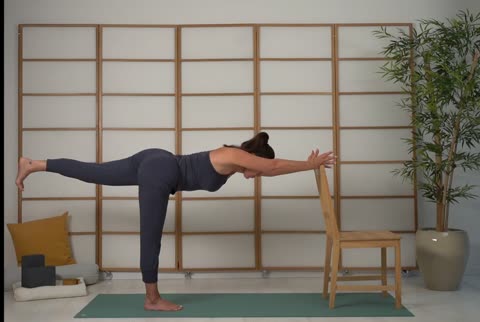
4. Warrior III, chair supported
20 to 30 seconds each side, working toward unsupported over time
- Face a stable chair and rest your hands on it
- Hinge forward from the hips, not the waist
- Slide one leg back and lift it
- Keep the standing knee soft and the neck long
- Then change sides
The guidance behind these movements
- Heel Pain, Plantar Fasciitis: Revision 2023, APTA clinical practice guideline (Koc et al., JOSPT 53(12)). Plantar fascia specific stretching and gastrocnemius and soleus stretching carry strong, grade A evidence for short and long term pain reduction; the guidance is activity modification rather than rest.
- Rathleff et al., high-load strength training in plantar fasciitis (Scandinavian Journal of Medicine and Science in Sports, 2015). High-load progressive strength training, using slow heel raises, is part of treatment, so graded loading belongs in the plan.