
Home exercise sheet
Lower back pain
Move slowly and stay in a range that feels comfortable. Mild stretch or effort is fine; sharp pain is a signal to stop.
Name:How often:Clinician:
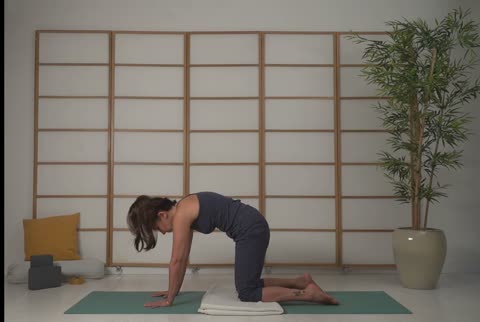
1. Cat-Cow
8 slow rounds
- Start on hands and knees
- Breathe out and round your back towards the ceiling
- Breathe in and reverse it
- Let the breath set the pace
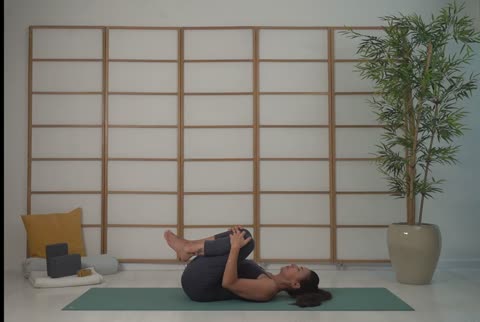
2. Knees to chest
30 to 60 seconds
- Lie on your back with your knees bent, feet flat
- Draw one or both knees toward your chest
- Hold, breathe, and let the lower back soften
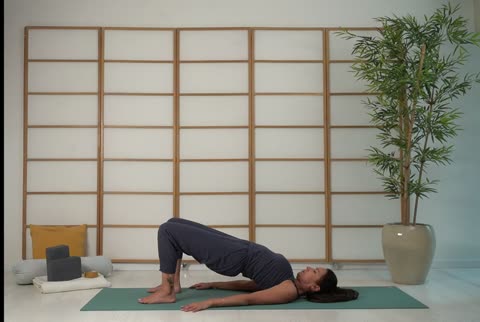
3. Glute bridge
8 to 10 slow lifts
- Lie on your back, knees bent, feet flat and about hip-width apart
- Press through your heels and lift your hips
- Lower slowly, one vertebra at a time
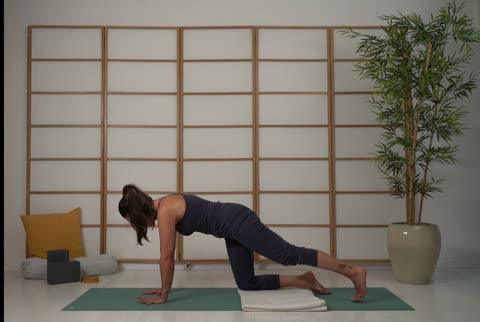
4. Bird-Dog, small range
5 each side, slowly
- Start on hands and knees
- Find a level back and keep it
- Slide one leg back until the toes brush the floor
- Return, and repeat on the other side
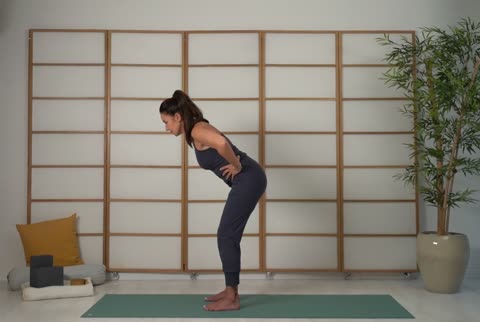
5. Hip hinge
8 to 10 reps
- Stand with feet about hip-width apart, knees softly unlocked
- Send your hips backwards, not your chest down
- Go as far as you can keep a long spine, then return
The guidance behind these movements
- NICE NG59, low back pain and sciatica in over 16s (2016, updated 29 July 2026). Offer self-management advice including encouragement to continue with normal activities, and consider a group exercise programme, biomechanical, aerobic, mind-body or a combination, chosen around the person's needs, preferences and capabilities.
- The McKenzie method for chronic low back pain with directional preference, systematic review with meta-analysis (2025). Direction-based treatment helps the subgroup with an identified directional preference, which supports assessing the person rather than treating the label.