
Home exercise sheet
Fibromyalgia
Move slowly and stay in a range that feels comfortable. Mild stretch or effort is fine; sharp pain is a signal to stop.
Name:How often:Clinician:
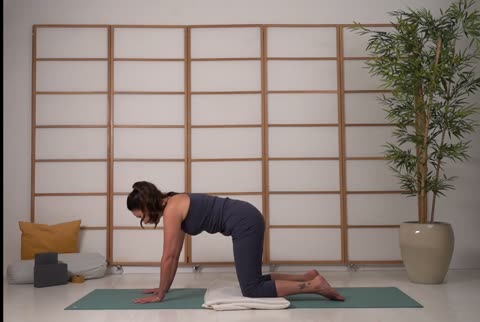
1. Cat-Cow, small range
6 slow rounds
- Come onto all fours with hands under shoulders
- Move only through the middle of your range
- Keep the pace slow and even
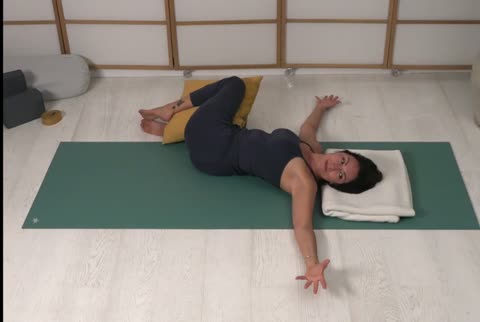
2. Open book
5 each side
- Lie on your side, knees bent up toward your chest, arms out in front
- Open your top arm across your body like a book cover
- Go to the first point of resistance and breathe there
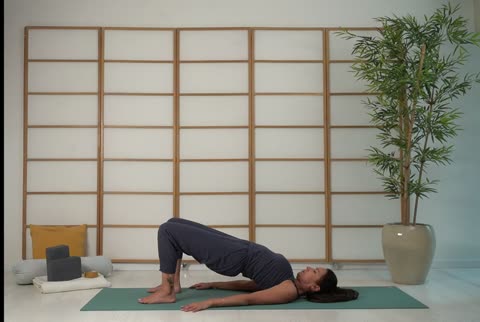
3. Glute bridge
6 to 8 slow lifts
- Lie on your back, knees bent, feet flat and about hip-width apart
- Press through your heels and lift your hips
- Lower slowly, one vertebra at a time
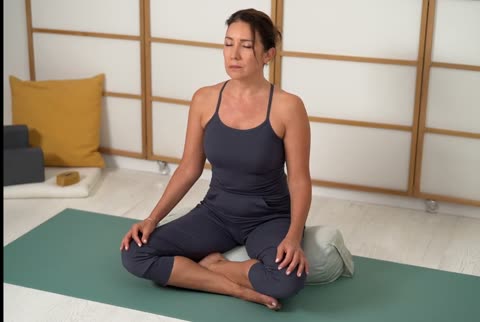
4. Extended exhale breathing
3 to 4 minutes
- Settle into any position you can stay in comfortably
- Breathe in through your nose for a count of four
- Breathe out for a count of six to eight
- Let the pause happen at the end of the exhale
The guidance behind these movements
- EULAR revised recommendations for the management of fibromyalgia (Macfarlane et al., Annals of the Rheumatic Diseases, 2017). Non-pharmacological management is the focus of initial therapy; exercise carries the strongest evidence and was endorsed unanimously, with no distinction drawn between aerobic and strengthening exercise.